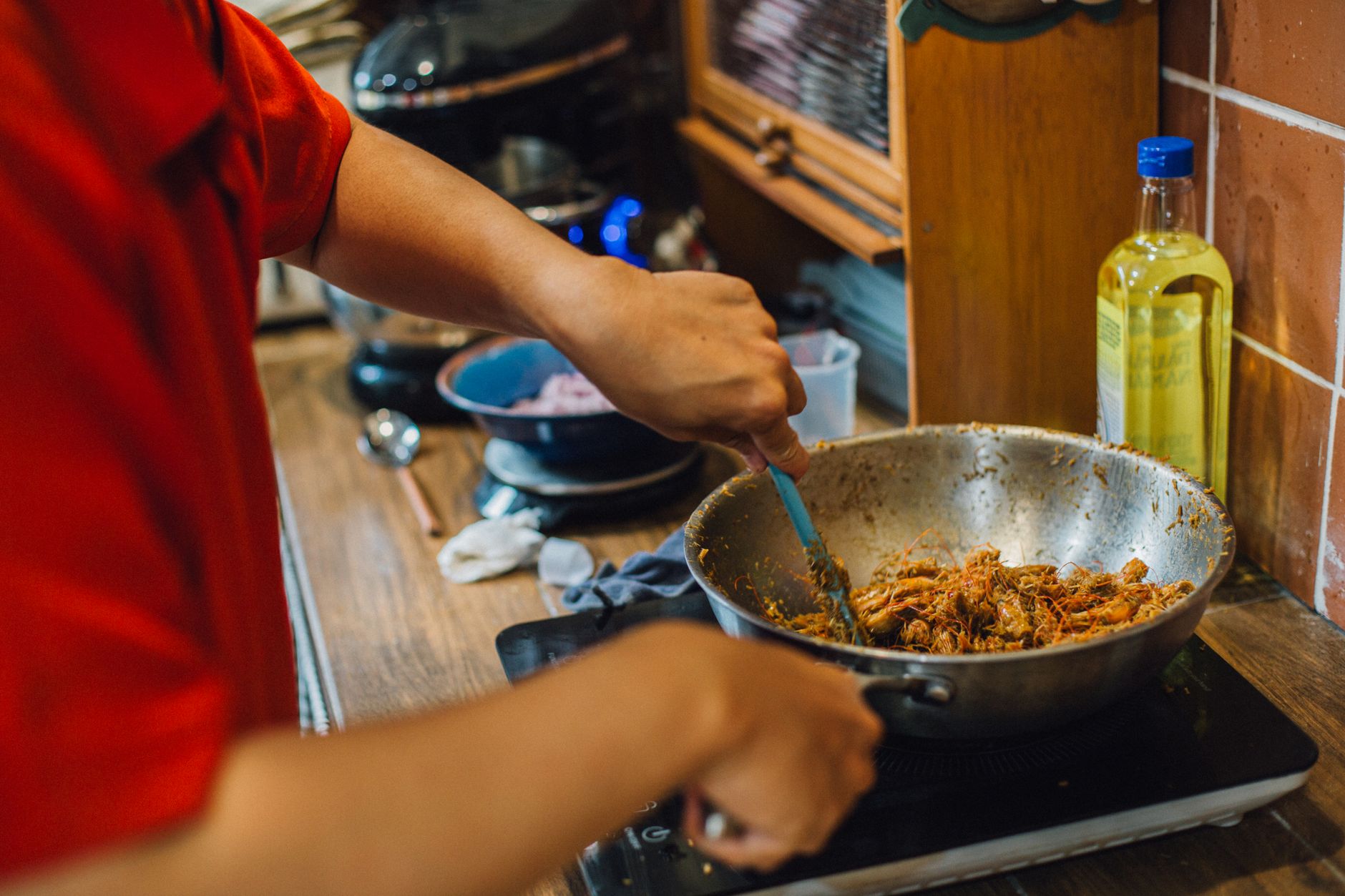
Juicy chicken every time comes from even thickness, light seasoning, and gentle heat with a short rest. This one-minute guide gives you a fast routine for breasts, thighs, and tenders. Juicy here means tender meat that releases clear juices when sliced. You need only a pan, oil, salt, and a lid or foil for resting.
Table of Contents
- Why does chicken turn dry?
- How do you prep and season in one minute?
- What is the quick pan method?
- How do you rest, slice, and store it?
- Frequently Asked Questions
Why does chicken turn dry?
Chicken dries out when thin parts overcook before thick parts finish. Breasts show this most because one end is thick and the other tapers.
Pounding evens the thickness so heat moves at one pace. Thighs stay forgiving because dark meat holds more fat and connective tissue. Butterflying means slicing the thick hump partway open and unfolding it flat.
How do you prep and season in one minute?
Pat the surface dry so seasoning sticks and browning starts fast. Wet surfaces steam first, which delays browning and extends cook time.
Season both sides right before cooking. Salt draws out moisture if it sits too long on thin cuts.
- Flatten thick spots with the heel of your hand or a heavy pan until level
- Pat dry with paper towels, then rub with a thin film of oil
- Sprinkle salt, pepper, and one extra flavor like garlic powder, paprika, or lemon zest
What is the quick pan method?
Use medium heat and a thin layer of oil that shimmers but does not smoke. Crowding drops pan temperature, so leave space between pieces.
Move smaller tenders out first. Thick breasts need the covered minute most, while thin cutlets often finish without it.
📨 Get Free Recipes Alerts
Free · No spam · Unsubscribe anytime
- Sear first side 3 to 4 minutes without moving until golden at the edges
- Flip once, lower heat slightly, and cook 3 to 5 minutes more
- Add a spoon of water and cover for 1 minute if centers still feel firm
How do you rest, slice, and store it?
Move cooked chicken to a warm plate and rest 5 minutes. Resting means letting hot meat sit undisturbed so juices settle back through the fibers. Cut into the thickest part to check that meat is white or lightly tan with clear juices.
For food safety, the center should reach 165 F (74 C) on a thermometer. Slice across the grain, which means across the visible fiber lines, for softer bites. Cool leftovers fast and refrigerate in a sealed container. Reheat gently with a splash of broth or water in a covered pan until steaming.
Frequently Asked Questions
Can I start with frozen chicken for this method?
Thaw it first in the refrigerator overnight. Frozen centers cook unevenly and the outside dries before the inside finishes.
Should I rinse raw chicken before seasoning?
No. Rinsing spreads droplets around the sink without removing germs. Patting dry and cooking fully handles safety.
Can I use this seasoning routine for an air fryer or grill?
Yes. Keep the same even thickness and light oil coating, then cook hot and fast and rest before slicing.
You Might Also Like
- 1-Minute Light Chicken and Vegetable Soup Recipe for November?
- 1-Minute Slow Cooker Beef Stew Recipe for Cold Nights
- 1-Minute Pumpkin Spice Overnight Oats Recipe for Fall Mornings